
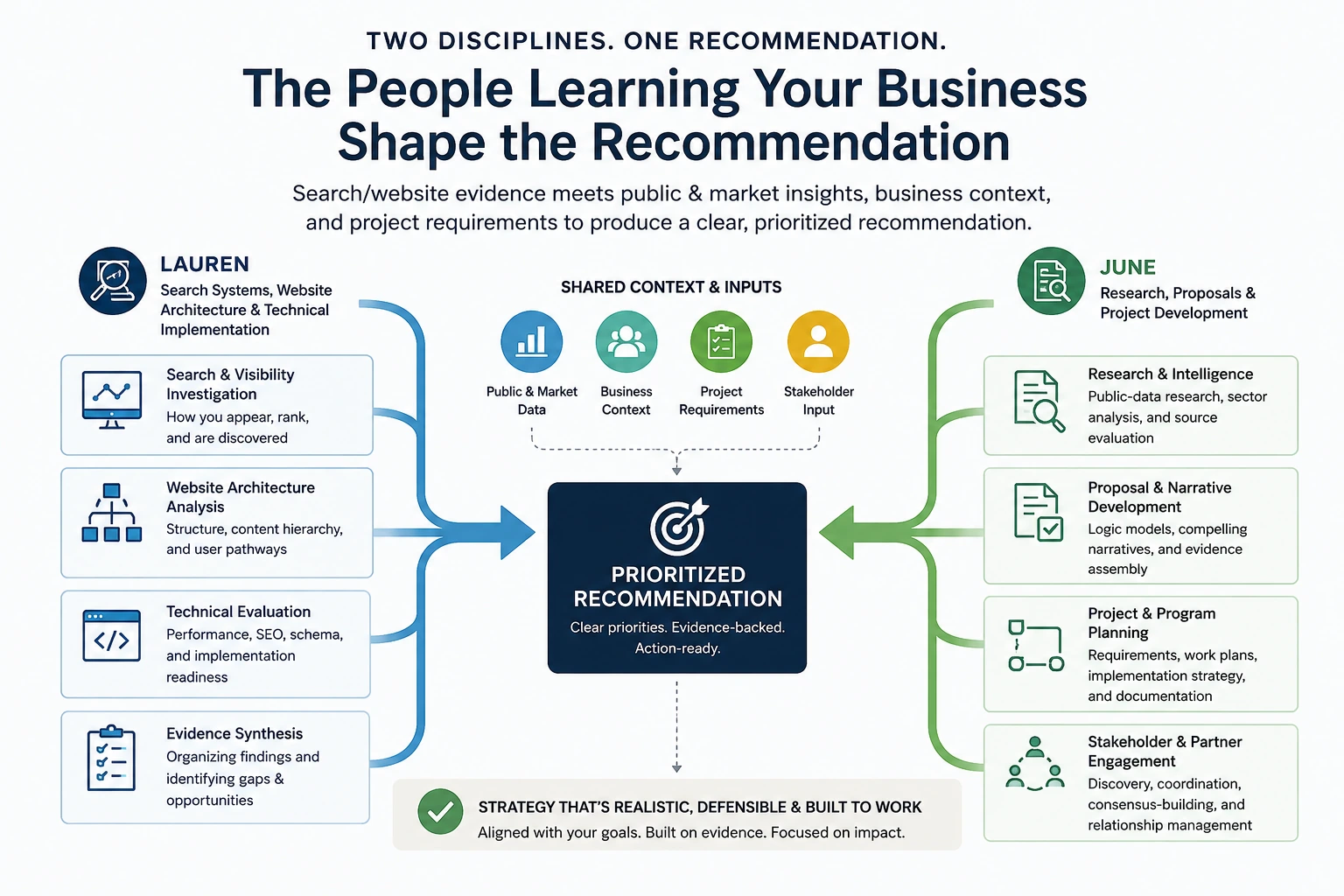


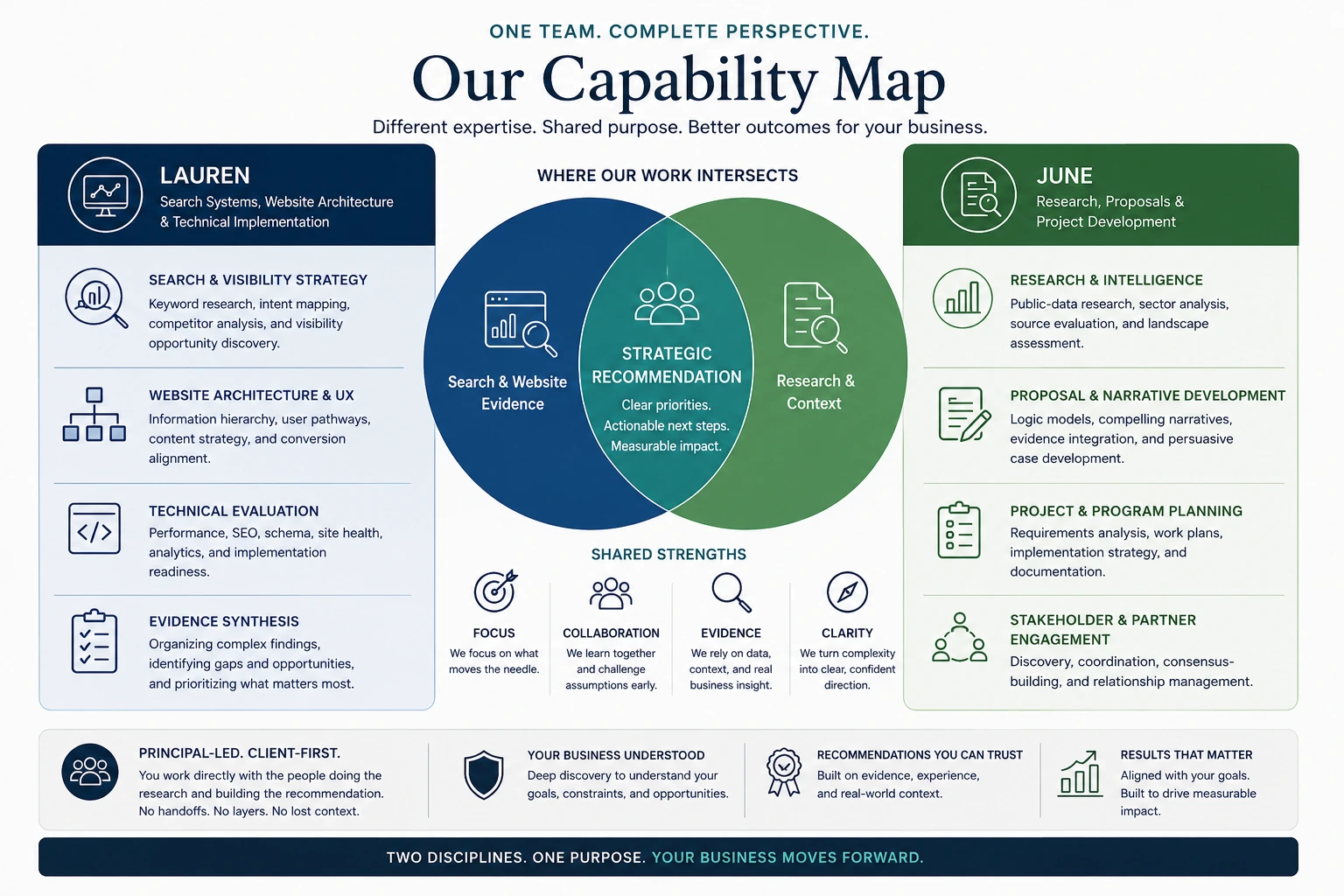
FLOWLINE brings together two complementary disciplines: search and website systems, and research-led project development. We study what is already working, what the evidence actually supports, what still needs context, and what should happen next.
Two disciplines. One recommendation.
In most agencies, the person who researched your company is not the person who wrote the proposal, who is not the person building the pages. Each handoff loses context. At FLOWLINE the same two principals stay involved from the first piece of research through the recommendation and the project itself. That’s not boutique charm—it’s continuity of context.
We learn the business, the market and the system before anything is prescribed.
The people who did the research write the case for what should happen first—and what shouldn’t.
The same people scope, sequence and implement. Nothing is re-explained to a fulfillment team.
Lauren works inside the search and website system itself: research, architecture, local visibility, content structure, technical SEO, infrastructure, measurement and implementation. Her job is to understand what exists, protect what has value, and build the smallest sound change that moves the business forward.
Search results, competitors, local visibility, customer questions and what Google already associates with the company.
Service, city and authority content built for how people actually search—SEO, AEO and GEO-aware.
Crawl, indexing, canonicals, schema, Search Console and Analytics continuity.
WordPress / Elementor build, infrastructure, dependencies, QA and rollback on live business sites.
What is the system doing, what should be protected, and what can we build or change safely?
June brings a background in grants, proposal development, public-data research and project management. She strengthens the work by testing the evidence against real requirements and business context, identifying what is still unknown, and turning complex findings into clear priorities, scopes and next steps.
Source vetting and corroboration—research that goes beyond a single SEO tool.
Evidence → rationale → priority → scope. Recommendations read like a case for action, not a bag of tactics.
Requirements, sequencing, dependencies and documentation—complex projects structured before execution starts.
Sector analysis and the missing-context questions: what does the evidence mean, and what don’t we know yet?
What does the evidence mean, what context is missing, and how do we turn it into a defensible plan?
Years of work in grant and public-funding environments—where every claim must be accurate, traceable and defensible—translate directly into how FLOWLINE separates what is observed, what is indicated and what still needs context. We don’t offer grant writing; we bring its discipline.
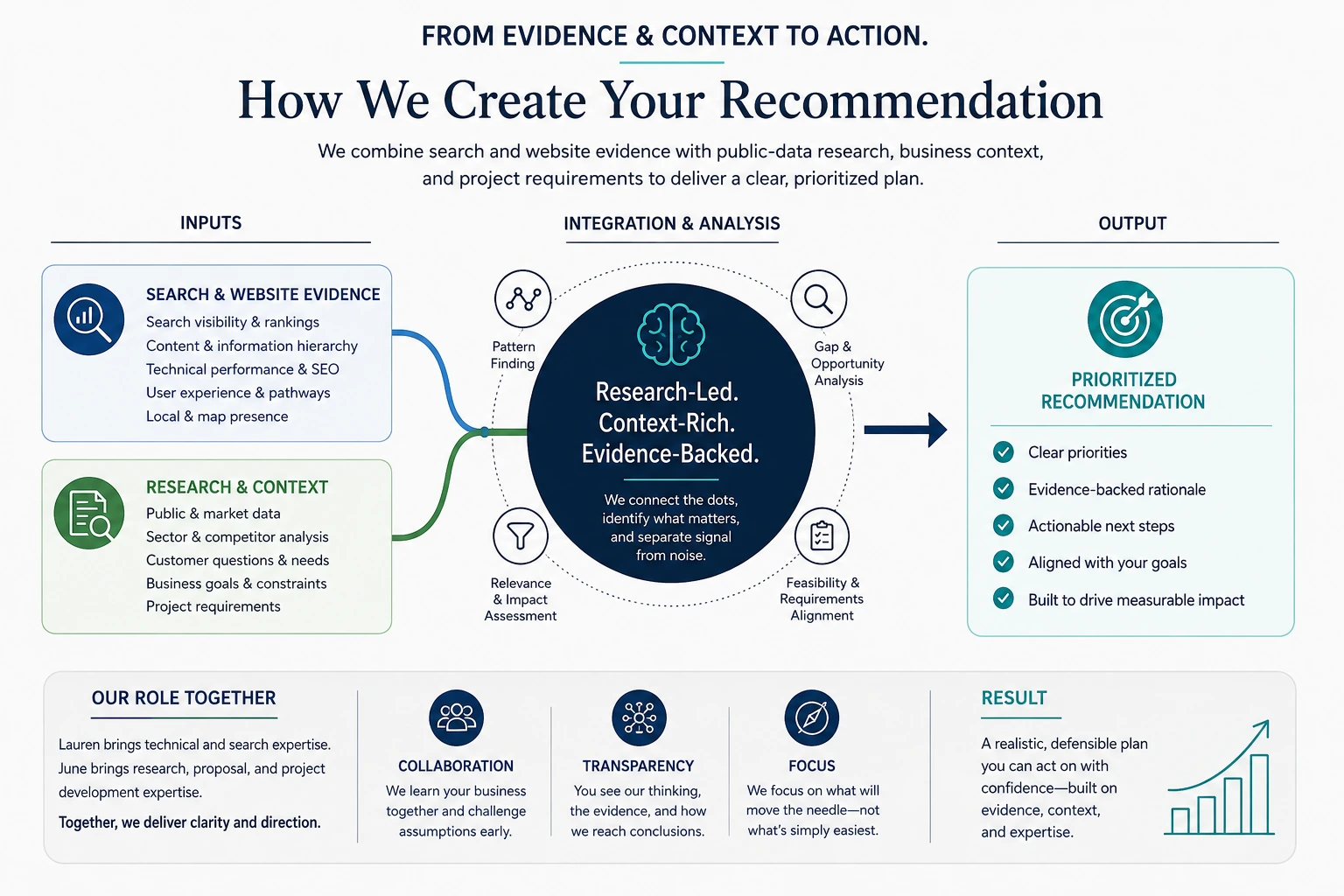
Search data without business context can produce the wrong recommendation. Business goals without a clear picture of the digital system can produce the wrong implementation. FLOWLINE keeps both in the same room—and both principals challenge assumptions before scope is finalized.
Four evidence streams resolve into one clear direction—with rationale, priorities and next steps.
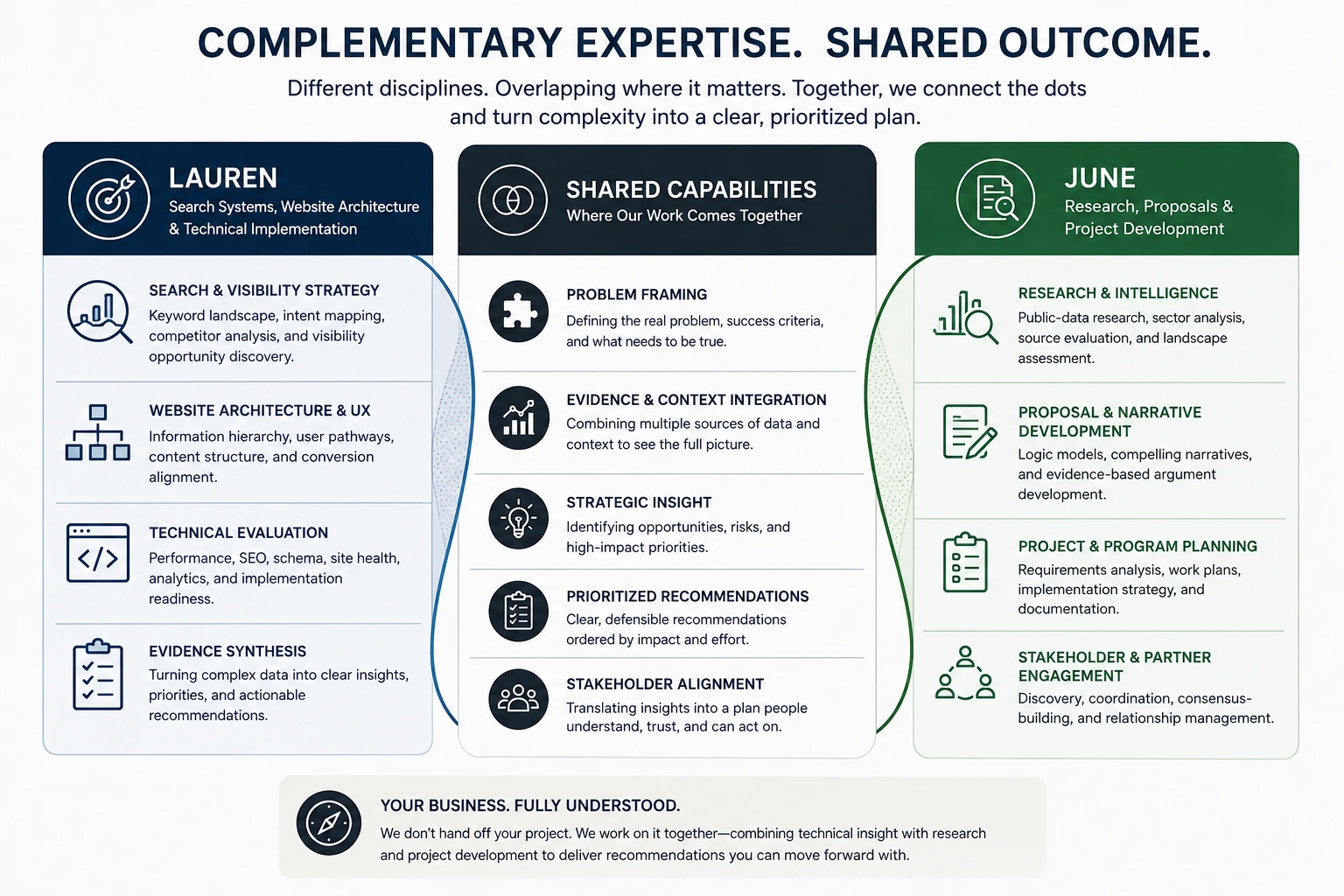
June’s lane is analytical and structural. Lauren’s lane is strategic and business-aware. Both are substantive; the overlap is deliberate.
Complementary expertise, shared outcome: different disciplines, overlapping where it matters.
Search, site, local and technical signals: what the system is actually doing and what can be changed safely.
Source research, business context, requirements and proposal logic: what the evidence means and what it cannot yet support.
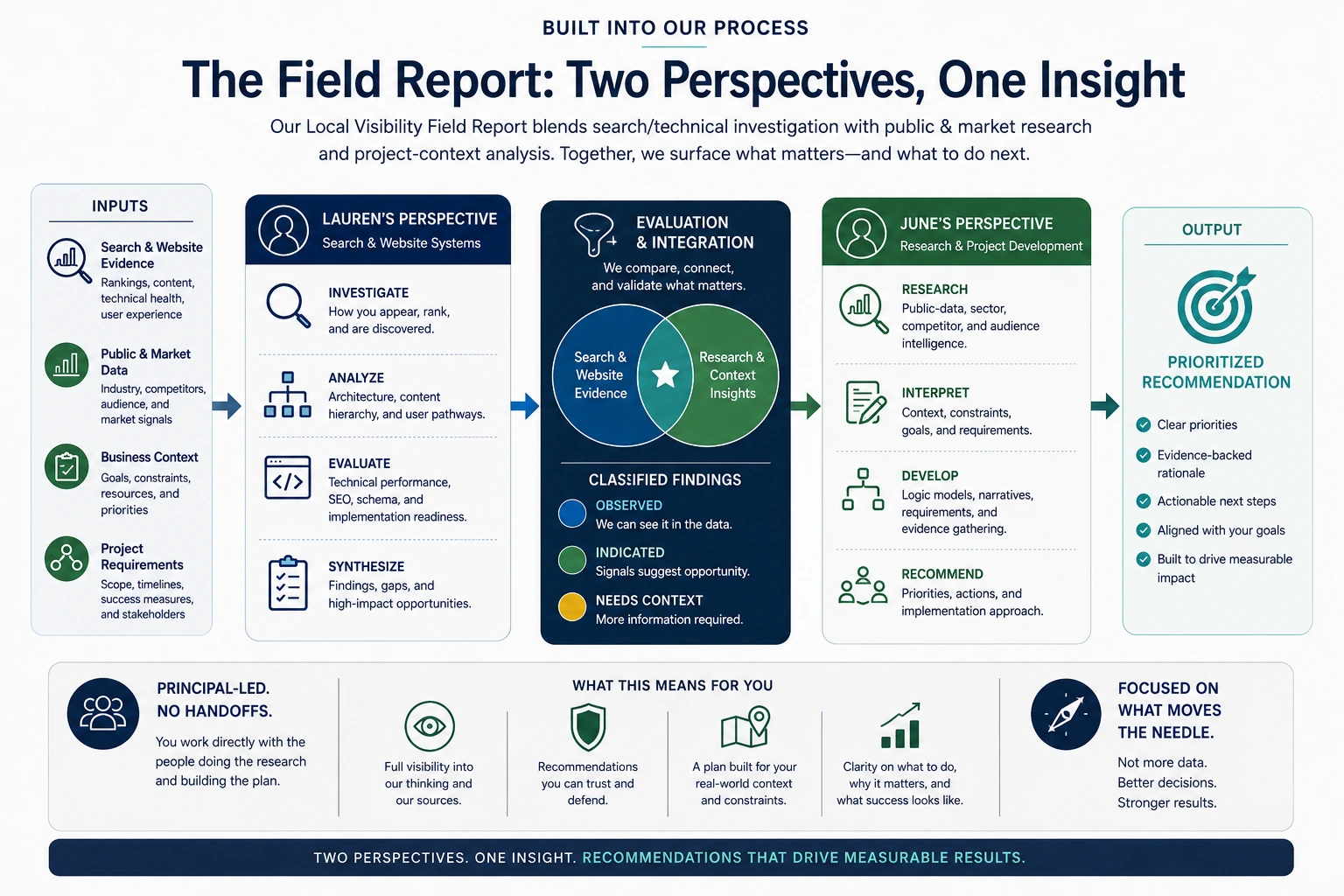
We can directly verify it.
Several pieces of evidence point the same way.
Could be an opportunity—we need your side first.
Two perspectives, one insight: search and website investigation meets research and project-context analysis.
You work directly with the people doing the research and building the plan. Research, plan and execution stay with the same two principals.
One team, complete perspective—where the two disciplines intersect.
The core strategy stays principal-led. If a project genuinely needs a specialist capability—design, custom development, paid media, photography or video—that role is added deliberately to the scope rather than hidden inside a generic package.
We describe the discipline of the work, not sole authorship of every document. FLOWLINE is principal-led and research-first; we don’t guarantee rankings or growth.