Before we recommend a move, we understand what it affects.
A plumbing company is an interconnected operating system. Services connect to locations. Locations connect to real customer needs. Reviews influence trust. Existing pages carry search history and equity. Infrastructure determines what can be built safely. Search visibility can’t be reduced to a keyword list.
We don’t start with a package. We start with your plumbing business.

The same recommendation can help one plumbing company and hurt another.
Three perfectly ordinary SEO recommendations show why context decides everything. None of them is right or wrong on its own.
Valuable when geography is real.
It can work when the company genuinely serves those cities, wants business there, real demand exists, and each page has distinct local substance and purpose.
When geography is manufactured rather than represented, the result is thin, repetitive content that helps no one.
Sometimes yes. Sometimes destructive.
A site can have genuine architectural, technical or conversion limitations that justify rebuilding.
A rebuild can erase URLs, rankings, backlinks, accumulated relevance, internal relationships and customer familiarity. Old is not the same as worthless.
Volume isn’t the goal. Knowledge is.
More content makes sense when the company holds real knowledge that isn’t represented online yet.
Generic articles repeating commodity information that already exists on thousands of plumbing websites don’t create value.
A tactic is not a strategy until we understand the conditions around it.
Six realities we investigate before building anything.
Before recommending a single change, we build a working model of the business across six domains. Together they decide what any tactic would actually touch.
Business Reality
Core services, specialty capabilities, priority work, genuine service territory, current capacity and desired growth direction. Search opportunity and desirable business opportunity are not always the same thing.
Customer Reality
Emergency needs, repair needs, planned projects, specialty problems and decision-stage questions. The architecture should mirror customer journeys, not force everyone into one generic “services” pathway.
Search Reality
Organic results, Google Maps, AI-assisted discovery, service queries, location queries, recurring competitors. The visible ranking is evidence — it isn’t the diagnosis.
Reputation Reality
Reviews used as research, not just a conversion widget. What customers repeatedly prove about the company can reveal capabilities the website barely communicates.
Website Reality
Services, geography, internal relationships, orphaned content, existing equity, mobile experience and conversion paths — inspected as a system, not page-by-page.
Infrastructure Reality
CMS, hosting, DNS, caching, backups, security, dependencies, maintainability and migration risk. The technology serves the strategy, not the other way around.
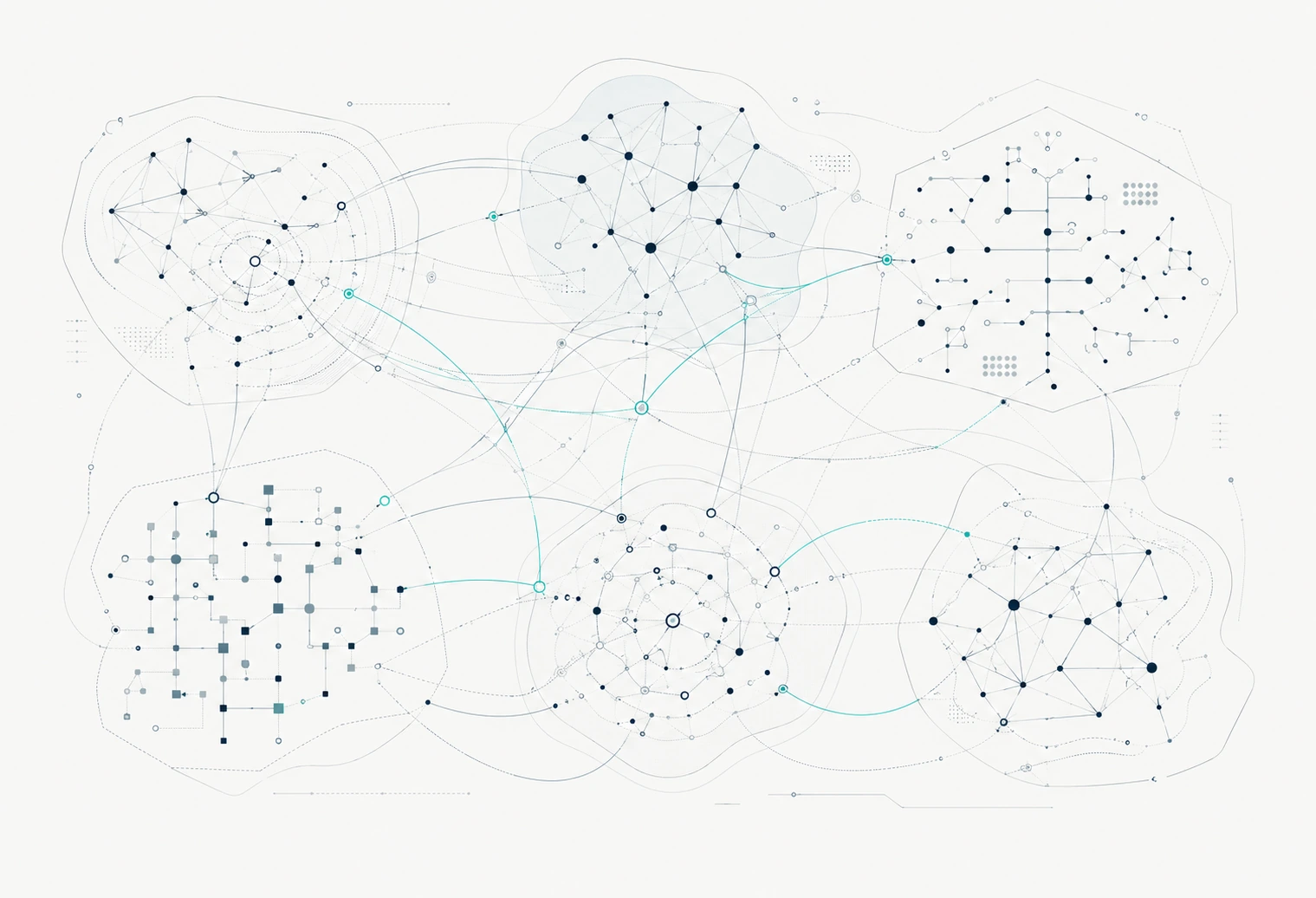
Strengths, gaps and disconnected signals.
Services × Cities × Customer Questions × Search Results × Competitors × Reputation × Expertise × Infrastructure. The map shows where the pieces reinforce one another — and where they don’t.
Often the information already exists. It just isn’t connected:
- A service exists but isn’t connected to relevant locations.
- A technician has real expertise but there’s no authority content.
- Reviews prove a specialty the service page never reflects.
- A city page exists but doesn’t connect back to its service family.
- A good educational article has no path toward commercial intent.
That often means the answer is reorganization — not “create more stuff.”
We separate symptoms from causes.
Take one ordinary symptom: “The company barely appears for water-heater repair.” A mainstream SEO response is immediate — create a water-heater page. We ask seven questions first.

Is the service represented clearly?
The company may do excellent water-heater work while the website barely describes it.
Does Google have a reason to associate the business with the service?
The service may appear in navigation but lack supporting signals.
Does a page already exist but lack internal relationships?
The problem may not be missing content at all. It may simply be an orphan.
Are competitors winning primarily through Maps?
If so, rebuilding an organic page may not address the actual gap.
Is reputation evidence missing?
Customers may repeatedly praise the work while none of that evidence appears where prospects or search systems can see it.
Is the page indexed and technically healthy?
Content won’t help if Google can’t properly access or interpret the page.
Does the company actually want more of this work?
The business question SEO agencies frequently skip.
Only then do we decide what the first move should be.
The answer changes by company; the discipline does not.
The methodology is intentionally reusable while the recommendation varies. Understand → Map → Build → Protect & Grow.

UNDERSTAND
What the company does, where it does it, what customers ask, what the team knows, which work matters, where the company wants to go.
Output: A grounded picture of the actual company.
MAP
Services, cities, customer questions, search results, competitors, reputation, expertise and infrastructure — mapped as one system.
Output: A visibility map showing strengths, gaps and disconnected signals.
BUILD
Protect → Improve → Expand → Create. New things are built only after the first three questions are answered.
Output: A prioritized plan based on impact, dependency and risk.
PROTECT & GROW
Preserve useful equity while creating room for the next layer of search visibility, content and infrastructure.
Output: A system capable of growing without another total reset.
What is already valuable?
Can the existing thing do its job better?
Does something valuable need more depth, geography or support?
Only after those three questions do we build something new.
The build phase doesn’t begin with “create.” Create comes last.
Every idea has to survive five filters.
Even after identifying an opportunity, we don’t automatically recommend it.
REAL
Does it reflect something the company actually does? No fictional expertise, fake markets or manufactured authority.
USEFUL
Will it help a customer understand or choose the business — not content for Google’s sake?
DISCOVERABLE
Does it create a meaningful path through Search, Maps or AI-assisted discovery?
DEFENSIBLE
Is it supported by actual experience, reputation or expertise?
SAFE
Can we do it without unnecessarily risking what already works?
An opportunity that could destroy stronger existing equity may not be worth pursuing in its original form.


We separate what we know from what we suspect.
Every recommendation is documented in a fixed vocabulary. It keeps research from turning into sales language.
“We noticed something interesting, but we don’t have enough evidence yet to tell you to spend money fixing it.” — a sentence most sales audits can’t say.
What FLOWLINE deliberately refuses to do.
No automated score pretending to be strategy
Tools can find issues. They cannot decide which issue matters most to the business. An automated audit is evidence — not judgment.
No rebuild because we prefer our own work
Useful existing assets stay useful — pages, URLs, copy, hosting, CMS, structures, tracking. Preservation is part of strategy.
No competitor cloning
Competitors are evidence about the market, not design templates. We learn from what Google rewards; we don’t reproduce someone else’s architecture.
No city-page factory
Geography should represent genuine service areas and useful local information, not manufactured variations.
No “AI optimization” tricks
We focus on useful, technically accessible, experience-backed information — entity clarity, answerability, topical relationships — not acronym-driven shortcuts.
No infrastructure migration without a reason
Hosting, DNS and CMS choices aren’t recommendations because they’re fashionable. The technology serves the strategy, not the other way around.
The methodology begins before you’re a client.
We use the same research mindset when deciding whether to contact a plumbing company in the first place. The Local Visibility Field Report shows what caught our attention, what appears worth protecting, and where we would investigate first — before anyone pays for anything.
There is a system. The system is standardized. The prescription isn’t.